The effects of conflict are felt hardest by women and children
Women and children are often the worst affected by conflict – it is vital that women play a central role in peace processes and post-conflict reconstruction.
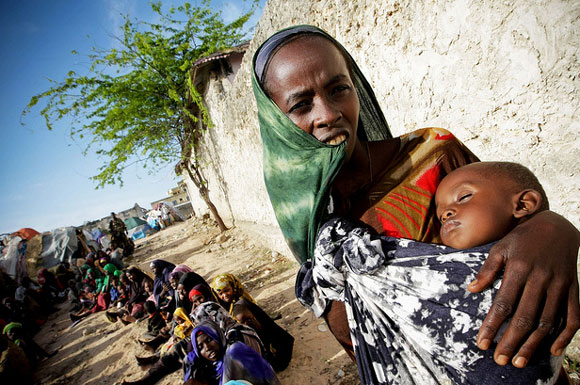
Image credit: UN Photo/Stuart Price
There is no doubt that war affects women and men differently. Whenever there has been conflict, women and children have been known to suffer disproportionately during and after war. Women and children are often the most vulnerable and prone to being hit the hardest.
Throughout history, we see examples of terrible abuses against women and children, from the 1.1 million children killed during the Holocaust to the many women and children raped or killed during the Rwandan Genocide.
Women who survive these atrocities often have to live with the vivid and terrifying images of rape, war, and death for the rest of their lives. Women also suffer from sexually transmitted diseases, stigmatization, and sometimes unwanted pregnancies. They are faced with the daunting task of keeping families together after displacement, providing food, clothing and shelter in what is in most instances, destroyed infrastructure, for their children and their families.
The current conflict situation in Somalia is another example of the crimes committed against women and children during war. According to Human Rights Watch, internally displaced people in Somalia are suffering sexual violence in the form of gang rape and other forms of abuse in Mogadishu’s refugee camps. Human Rights Watch reports that the abuse takes place at the hands of armed groups, including government forces. The rape is gruesome and degrading. A 23-year-old woman who was 9 months pregnant was gang raped by 3 men in army uniforms. Women suffer quietly as they fear stigma, reprisal and even execution.
“While women remain a minority of combatants and perpetrators of war, they increasingly suffer the greatest harm,” said the veteran editor at the African Woman and Child Feature Service, Jane Godia, in an interview with Gender Governance Kenya.
She added, “Parties in conflict situations often rape women, sometimes using systematic rape as a tactic of war.”
The effects of war continue for years after the fighting ends as many women are left widowed and many children are orphaned. Women struggle to sustain livelihoods for their children after conflict.
It is therefore of great importance that women begin to play a significant role in curbing the effects of violence, not only for themselves, but their families and communities at large. To a great extent, women need to be actively included and involved in the formal aspects of the peace process so that they can stand up for their rights and rally for peace at a national level. The inter-linkages between women’s development, peace, security, and human rights cannot be denied.
Still women continue to be absent from formal peace negotiations especially in Africa. For example, despite the relentless grassroots efforts of the women of Sierra Leone to end civil war, they were left out in the final negotiations of the Lome Peace Accord of 1999 held in Togo, Lome.
Women are seen as victims of conflict that need to be protected and kept safe rather than agents of change for peace. Because of such views and sentiments, the elimination of violence against women in conflict prone areas continues to pose challenges.
Strides and efforts continue to be made to bring women to the forefront as agents of peace and positive political change. The UN Security Council recognizes women’s inclusion strengthens prospects of sustainable peace. In October 2000, the resolution 1325 was adopted which recognizes the role of women in strengthening their participation in decision-making, ending sexual violence and impunity, and providing an accountability system.
UN Women also supports projects that focus on increasing women’s participation in decision-making, promoting the use of gender perspectives in policy development, strengthening the protection of women affected by conflict, countering conflict-related sexual violence, amplifying calls for accountability and advancing the status of women in post-conflict settings.
However, more needs to be done to empower women. Women must begin to play a significant and major part in peace talks and post-conflict reconstruction and they should be empowered to take a stand against gender violence.
Themes