Serena Rix on Nepal
Serena Rix of Search for Common Ground explains the importance of finding partners with a similar mission and goals
Search for Common Ground (SFCG) co-designed and implemented a full training project with the Antenna Foundation which has led to working with 15 local FM radio stations in Nepal. Serena Rix takes up the story:
What was important to us was to find a partner organisation that was capable, neutral and had a good reputation in Nepal. It was clear that Antenna (AFN) was the best partner for national radio work…it was a time when the media were under pressure and censorship from the King of Nepal.
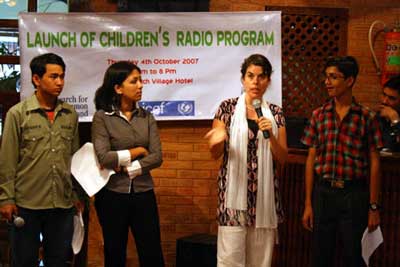
Local partners
In Nepal, the government insists that all implementation of projects is done through local partners.
This has both pros and cons for us. The advantages are that it is more sustainable, because you are building the capacity of local organisations. Also by combining with them, we can achieve more together than we would be able to do on our own. On the downside, it is much harder, because Search is mission driven so we have to find organisations where the mission matches our own – where the local partner doesn’t just carry out the particular activities we are interested in, but does it in the same mould as Search.Get your act together
The partnership with Antenna has been a great success, extending the original project to include 22 partners and working with 15 local FM stations, who take the national programming and produce local versions of it.
You really have to get your act together in terms of finance and administration. 22 partners puts a huge administrative burden on our organisation, and you have to be prepared for that.True or falseThe real success, says Rix, is that Antenna don’t need SFCG so much “now we’ve been working with them for three years …it’s clear that they’re very adept at creating peacebuilding programming, and don’t need much input from us anymore, which enables us to focus on new partners. There is a real sense of joy in finding that we are no longer needed by a partner, and also it’s good to feel that if we ran out of funding, we would leave behind a legacy of peacebuilding expertise in the country.
But, she says, once funding for peacebuilding became available in Nepal, some organisations simply added it as a “bolt on.”
So we try to assess whether they are really interested in peacebuilding, or whether it’s just ‘pasted on.’ We might find a more genuine interest in an organisation whose core field is something else – for example, youth empowerment or human rights – and we would go with them, aslong as we felt their mission was aligned to ours.
Locations