March 2013
This month’s edition features articles on youth and conflict, preventing sexual violence, resilience, and more
Research this month
Examining the links between youth economic opportunity, civic engagement, and conflict
This research provides further evidence that the connection between youth employment and participation in political violence is not straightforward.
This short (6 pages) policy brief, from Mercy Corps looks at the links between youth economic opportunity, civic engagement and conflict. Drawing on evidence from Mercy Corps Youth Leaders Initiative in Somalia, the paper documents some surprising findings; for example, their research suggested that youths in school were more likely to support the use of violence than those not in school.
Local faith communities and the promotion of resilience in humanitarian situations – A scoping study
Faith groups are often central to strengthening resilience and reinforcing the local processes of identity and connection that comprise the social fabric of communities disrupted by disaster or conflict.
This study, from the Refugee Studies Centre at Oxford University, and the Joint Learning Initiative on Faith and Local Communities, examines the role “Local Faith Communities” have in building resilient communities. The study includes evidence for the impact of local faith communities, the engagement between them and humanitarian organisations, and identifies areas in need of further research.
Preventing conflict-related sexual violence
[We] need to focus on prevention; how to stop sexual violence from occurring in the first place. The fact that many armed groups manage to effectively prohibit sexual violence shows that prevention is possible.
This policy brief, from PRIO, outlines possible ways of preventing sexual violence in conflict situations. The paper identifies six potential avenues of prevention.
Trainer Manual – mainstreaming gender into peacebuilding trainings
A training manual, from the Center for International Peace Operations, for practitioners looking to integrate a gender perspective into their peacebuilding trainings. The manual focuses on four areas of peacebuilding – disarmament, democratisation and reintegration; human rights and rule of law, negotiation and mediation; and election monitoring.
Resilience and Peacebuilding
[These publications] draw together the operational experience from different sectors and institutions to achieve higher levels of resilience of communities and institutions, and identify a series of action points to strengthen resilience in peacebuilding contexts.
‘Resilience’ is an increasingly popular term in peacebuilding. This series of publications, from the Geneva Peacebuilding Platform, looks at the concept of resilience, and what applications it has in a peacebuilding context.
It’s who you know: Social networks, interpersonal connections, and participation in collective violence
The evidence presented here reinforces the growing consensus that social networks and social ties, the sources of social capital, have a dark side. The better connected an individual is to his community generally and to other participants specifically, the more likely he is to be drawn into extreme antisocial group behavior such as genocidal collective violence
It’s who you know presents research into how social capital influences the likelihood of participation in collective violence. Drawing on evidence collected following the Rwandan genocide, the paper argues that the strength of social ties are strong predictors of participation in collective violence.
From the Insight on Conflict Blog
Burundi: Problematic reconciliation in the hills
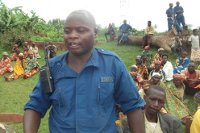
Alexia Foundation: challenging injustice with photography
The Alexia Foundation promotes the use of photography to challenge social injustice. The foundation provides grants, scholarships and other means to support photographers as agents of change. Here are examples of the work the foundation has funded Read more »Keystone Accountability Survey: a call for participants
For the majority of those involved in international development, partnerships between international NGOs and local organizations are key. The question is, what does it take to make these partnerships work? Moreover, given the power imbalances that often characterize these relationships, improving partnerships is a significant challenge. To answer these questions Keystone Accountability is running its Development Partnerships survey and is looking for organisations to take part. Read more »The Rebuilding Artisans Programme (RAP) in Liberia
The Rebuilding Artisans Programme (RAP) in Liberia is an approach to rebuilding sustainable employment and a local capacity for donors to procure services in a post conflict environment. The project was established at the end of 15 years of civil war in Liberia, providing a future for young ex-combatants and “other war-affected people” Read more »Pakistan: A look back at 2012
In 2012 Pakistan faced another wave of terrorism-related violence and instability. In this article, Zahid Shahab Ahmed, Insight on Conflict’s Local Correspondent for Pakistan, focuses on a variety of issues, including terrorism and counterterrorism, to see where Pakistan is heading in coming years and what should be done to improve the situation. Read more »Breaking the cycle of violence with peace programmes
Peace programmes play an essential and positive role in conflict torn regions, working at the lowest level of society to create an economically viable and secure society, however these programmes are consistently underfunded and underutilised. With sustainability quickly becoming the buzzword for many funders, is it time to readdress the imbalance in funding for these programmes and give them a chance to work? Read more »Photographing peacebuilders in Sri Lanka
Stephanie Rose Wood, a London-based photographer, travelled Sri Lanka photographing local peacebuilders. In the first part in a series of blog posts, Stephanie shares her work. Read more »Peacebuilding needs strong communities as well as strong institutions
Lord Jack McConnell argues that it is imperative that post-conflict interventions target the local as well as the national, and proposes a proportion of the UK aid budget be ring-fenced for expenditure on peacebuilding at a local level. Read more »Community level data collection in Liberia
Gathering reliable data on the incidence and impact of armed violence is critical to the development of effective reduction and prevention programmes. This blog describes how a wide range of local organisations in Liberia have come together to form the Liberia Armed Violence Observatory. The project was initiated by Action on Armed Violence (AOAV) but over the next year, full ownership is expected to be transferred to the Liberian partners. Read more »