Broadcasting Peace
Our new report, ‘Broadcasting Peace: Insights and lessons from local peacebuilders in Eastern DRC’, shares insights from local civil society groups, and maps local peacebuilding efforts amid rising violence in the country.

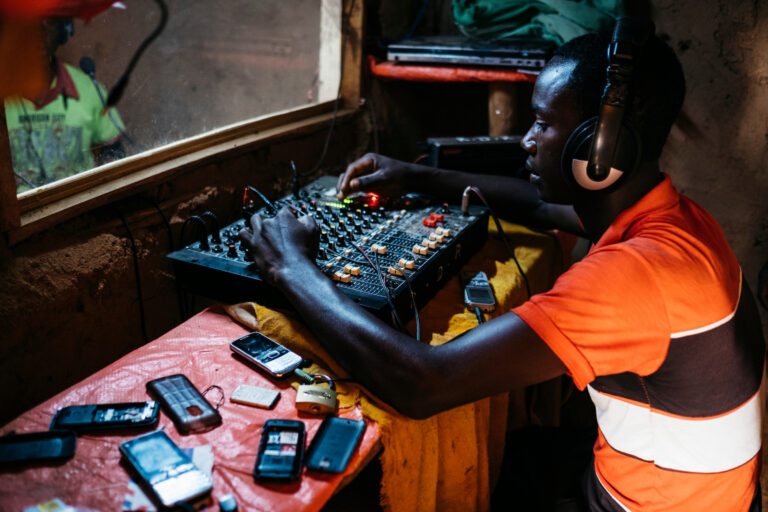
Our new report, ‘Broadcasting Peace: Insights and lessons from local peacebuilders in Eastern DRC’, shares insights from local civil society groups, and maps local peacebuilding efforts amid rising violence in the country.
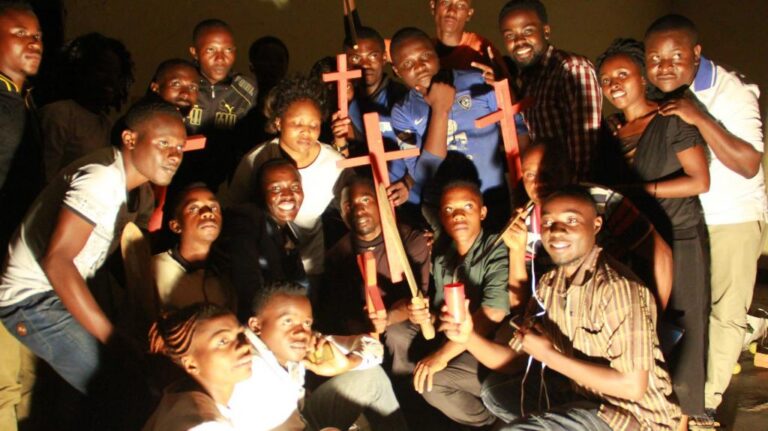
For the past two years, drama workshops have been carried out in the north-east of the Democratic Republic of Congo (DRC) for former child soldiers, who then go on to perform shows in their communities. The aim of the workshops is to facilitate their reintegration into society, notably by changing the way people look at them.
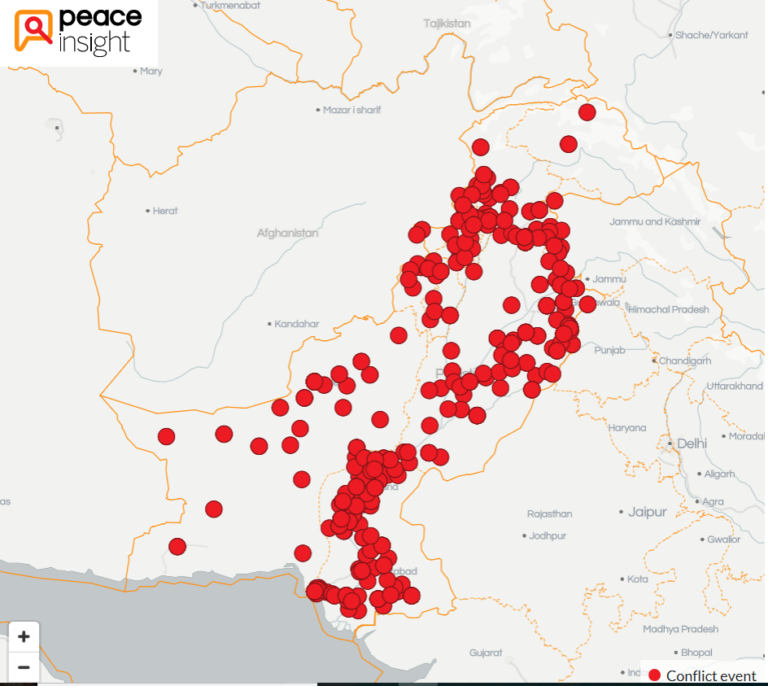
In this month’s edition, Local Peacebuilding Experts from Pakistan, Ukraine, Cote d’Ivoire and Lebanon provide their latest analysis of conflict in their areas – and what it means for peacebuilders.
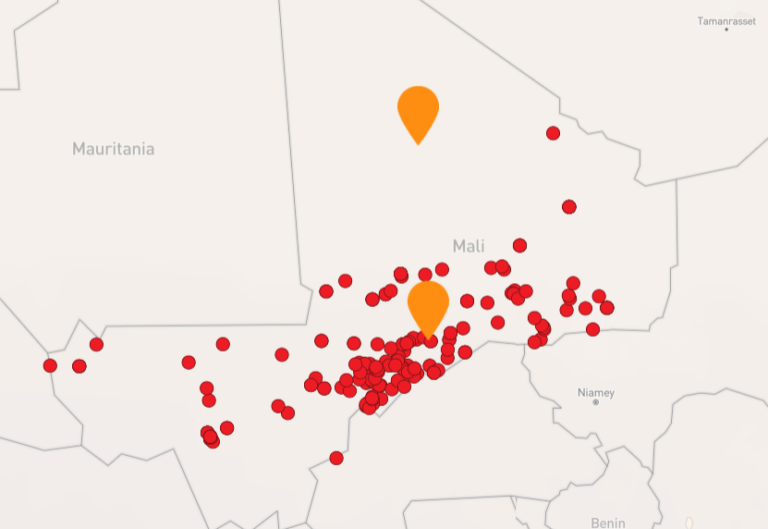
In this month’s edition, Local Peacebuilding Experts from Yemen, Syria, Sierra Leone, Niger and Nepal provide their latest analysis of conflict in their areas – and what it means for peacebuilders.
Peace Direct’s latest report presents the analysis and recommendations of atrocity prevention and peacebuilding from experts and practitioners from across the globe, and advocates for the recognition of the critical role that local civil society and locally-led peacebuilding approaches play in preventing and stopping atrocities.
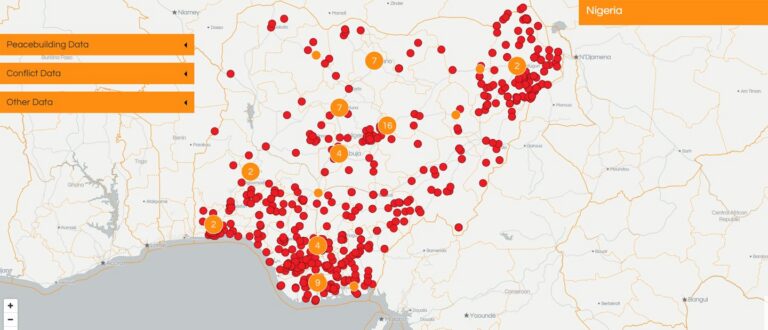
Today, Peace Insight launches a brand new tool and exciting feature: Peace Dispatch provides real time analysis on instances of violence as they happen. Peace Dispatch is a unique new feature, mapping live incidences of violence and peacebuilding initiatives. It brings together instances of violent outbreaks alongside instances of local peacebuilding, showing exactly what is being done to halt violence and build peace in the aftermath.

International Refugee Rights Initiative (IRRI) published a new report about violence and displacement in the Kasai region of the Democratic Republic of Congo (DRC). It describes how attacks by a militia were followed by abusive military operations and mass killings by a pro-government militia, causing the death and displacement of hundreds of thousands.
In August, at least 42 civilians were hacked to death with machetes in Beni, Eastern
DR Congo. It was not the first time such violence has taken place, and it may not be the
last. So how can the killing be stopped? Peace Direct has released a briefing on the situation in Congo.
The relationship between civilians and the military in eastern Congo is a vital one, but soldiers have been accused of impunity for past crimes. One soldier’s story shows how things might be changing, say Nadia Shabani and Alexa Hassink.
DR Congo President Joseph Kabila is yet to declare whether he will stand in this year’s election. The uncertainty is scaring people, says Maguy Libebele.
Peace Direct’s Local Peacebuilding Experts come together to discuss key issues in a new series of reports.
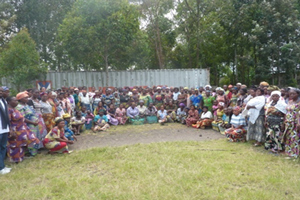
Peace Direct research indicates that there are a wide range of local and international conflict early warning and response programmes in eastern DRC.