Thailand’s nonviolent activists and the struggle for democracy
Anti-coup activists in Thailand are employing nonviolent tactics to express their discontent against the junta and military rule.

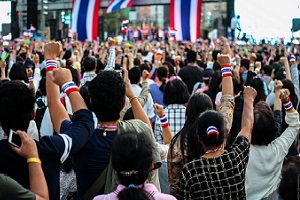
Anti-coup activists in Thailand are employing nonviolent tactics to express their discontent against the junta and military rule.
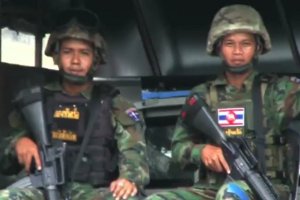
A tentative peace process is raising hopes of an end to the ten-year long insurgency in Southern Thailand.

Prospects for reconciliation and an end to years of political unrest remain slim as Thailand moves nervously towards national elections.

Injustice, impunity and abuse in Thailand. Obstacles to peace and the case of missing human rights lawyer, Somchai Neelaphaijit.

May 2010 analysis of the violent clashes between Red Shirts and military and police forces in Thailand, by Professor Otto F. von Feigenblatt. Will the Thai elite learn from the recent peaceful transition in Nepal?
Maplecroft have just released their latest Terrorism Risk Index, and Thailand has entered the category of countries with an ‘extreme risk of terrorism’

Kokaew Wongphan reports on the success of the Faith Community Network in involving local people in village decision making

2009 saw many academic seminars on the conflict in Thailand, Kokaew reports on the need for more local voices in the discussion.
Kokaew Wongphan gives background context to the conflict in South Thailand and how it affects the local population
Beginning in 2007, ARF-Pattani have been running a peace training program in 36 schools in the provinces of Yala, Pattani and Narathiwar. Students are taught about human rights and the importance of peace. Living in conflict zones, many of the students bring personal stories of lives affected by violence – many have lost a family member, or know somebody who has. By learning about their rights, students are able to protect their basic rights, and will be better able to speak out about human rights abuses.
Kokaew Wongphan reports on her December 2009 visit to the conflict-affected region of South Thailand
The violence in South Thailand began in 2004 and has showed little signs of subsiding. In an effort to reverse the trend, The Southern Border Province Administration Centre (SBPAC) and Mahidol University established a peace training program in 2007. The 3 month course would train 125 local officials in South Thailand in peacebuilding techniques. In 2008, SBPAC and Mahidol University took 69 of the participants to become ‘Peace Volunteers’ to put what they had learned into practice in their local areas.