RD Congo : Les rôles les et internationaux à la réconciliation
Quelle a été la contribution des organisations locales et internationales à la réconciliation en Ituri, RD Congo ?

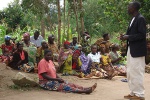
Quelle a été la contribution des organisations locales et internationales à la réconciliation en Ituri, RD Congo ?

The Other Voice is one of Israel/Palestine’s most unlikely peace groups, bringing together those living on the fault line of the conflict.

An interview with Bassam Aramin – one of the founders of Combatants for Peace, an organisation made up of ex-fighters from both sides of the Israel-Palestine conflict who have renounced violence

Entrevista con Bassam Aramin – uno de los fundadores de los combatientes por la paz, una organización formada por ex combatientes de ambos lados del conflicto entre Israel y Palestina que han renunciado a la violencia

Un entretien avec Bassam Aramin – un des fondateurs des combattants pour la paix, une organisation composée d’anciens combattants des deux côtés du conflit israélo-palestinien qui ont renoncé à la violence
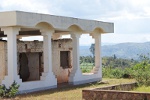
How can memorials help challenge the legacies of violence and impunity after conflict in Burundi.
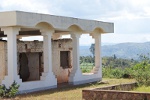
Cómo ayudan los monumentos desafiar el legado de violencia y la impunidad tras conflicto en Burundi.
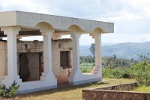
Comment les mémoriaux peut-elle contester l’héritage de la violence et l’impunité après le conflit au Burundi.
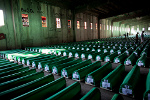
16 years after the Srebrenica genocide, Ratko Mladić has been arrested. What does the future hold for peace and reconciliation in Bosnia and Serbia?
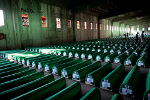
16 años después del genocidio de Srebrenica, Ratko Mladić ha sido detenido. ¿Cuál es el futuro de paz y la reconciliación en Bosnia y Serbia?
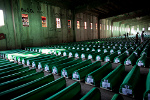
16 ans après le génocide de Srebrenica, Ratko Mladić a été arrêté. Quel avenir pour la paix et la réconciliation en Bosnie et en Serbie ?
Fifteen years on from the end of violent conflict in Bosnia and Herzegovina, the consequences of war still exert a heavy influence over society. In the absence of a civic conception of state, the ethnicisation of society continues apace; leading many to describe today’s divisions as being as wide as at any point since 1995. Tuzla is home to some 180,000 citizens, including many displaced by the conflict of the early-nineties. In spite of the demographic turbulence that BiH has endured, Tuzla has remained largely multi-ethnic in composition, with Bosniaks (Bosnian Muslims), Croats and Serbs residing side-by-side.