Women’s resistance to extremism: a report from a recent forum on women’s security in the MENA region
In May 2015, a forum to address women’s security issues in the MENA region was held in Iraq. Ala Ali reflects on the discussions of the forum and its recommendations for strengthening women’s rights in extremist contexts.
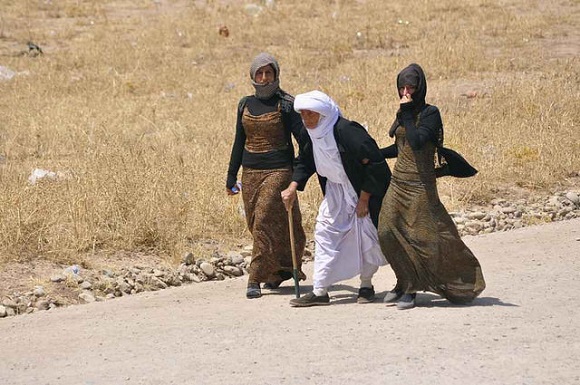
The ISIS attack on Yazidi women has caused high amounts of civilian displacement. Image credit: Domenico
The past year has witnessed a series of dramatic events commencing with the ISIS invasion of large areas of Iraq. The most heinous crimes of ethnic and religious cleansing have been committed by ISIS terrorists, including the displacement of about 2.6 million civilians – mainly from minority groups such as Christians, Yaziis, Turkmen and Shebak.
Violence against women: the current situation
A large number of Yazidi women and girls have been abducted and harassed. Many are assaulted in atrocious practices including the sale of women into sexual slavery, rape, murder, and the forced conversion to Islam. The destiny of most of the abducted women and girls remains unknown.
Women across Syria are subject to inhuman practices at the hands of ISISIn the areas controlled by ISIS, extremely intolerant views against women are promoted. They restrict female access to schools, the workplace and public spaces. Women are required to wear the heavy veil, and a penalty of whipping is imposed on women who violate these strict rules. A number of women activists, candidates for elections, physicians, lawyers, judges, journalists and academics have been killed by ISIS. Women across Syria are subject to inhuman practices at the hands of ISIS and other armed extremist groups.
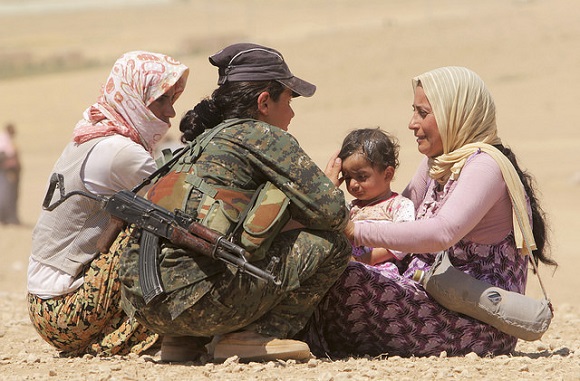
Abduction and sexual exploitation are becoming common practice in the lives of Yazidi women. Image credit: trust.org
Many countries in the Middle East and North Africa (MENA) region are witnessing unrest and armed conflict. The rise in forces of extremism and terrorism have led to a decline in gender equality and women’s rights. Sexual harassment and other violent acts against women are becoming common practice, even at work.
The prevalence of religious legislation enables the sexual exploitation of girls by ISIS combatantsIn addition, there remains the prevalence of religious Fatwas (legal pronouncements) that promote child marriage, polygamy, female circumcision and the sexual exploitation of women under strange nomenclature, such as temporary marriages, including Jihad almonakhah. This allows girls to offer themselves to combatants in Syria for sexual intercourse to raise their morale in combat.
Women’s Security Forum: May 2015
The current situation for women constitutes a serious setback to obligations of the states within the region. The Iraqi Al-Amal Association took the initiative to organise a MENA Women Security Forum in Erbil, Iraq on 10-11 May 2015. The forum was conducted with a number of governmental and non-governmental institutions, and regional and international NGOs. These included the International Civic Action Network (ICAN), the Kurdistan High Women Council, and the Kurdistan Ministry of Interior. The title of the Forum was: ‘Women’s Resistance to Extremism and Terrorism & their Struggle for Rights, Peace & Security’.
Survivors asked the participants to help stop the suffering of Yazidi girls at the hands of ISISThe importance of the Forum is summed up in the words of two Yazidi girls who attended, both survivors of ISIS violence: ‘Please rescue our Yazidi girls, women and children from ISIS and stop our suffering’. This message was shared with the 150 participants of the Forum, amongst whom were female victims and activists, experts in law, religious scholars, and researchers. Governmental representatives, INGOs and inter-governmental bodies including UN agencies also participated.
The main focus of the Forum was on UNSCR 1325. It sought to enhance mutual understanding, interactions and joint action amongst local, national and international organisations. It addressed the dangers and consequences of the ideology of extremism and terrorism in the MENA region for women’s rights, security and peace. It aimed also to highlight the plight of the internally displaced and refugees, reflecting specifically on women’s human rights activists in the MENA region. The Forum mobilised support and created a political will for adopting and implementing plans of action at the local level. It also mobilised international support to expose inhuman practices against women in MENA, leading to the drafting of a new resolution on the protection of women under conditions of terrorism and extremism.
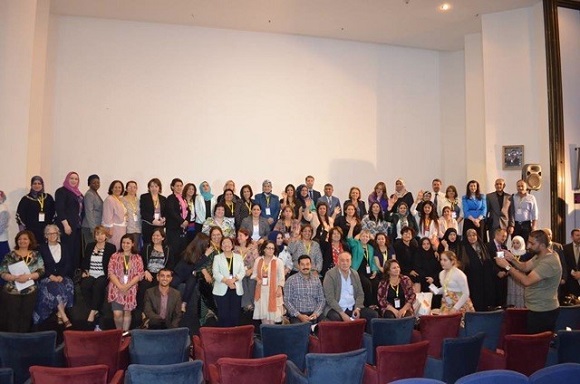
Amongst the 150 participants of the Forum were representatives from international and local NGOs, as well as government ministers.
The Forum promoted common understanding and joint action to counter the threat of extremism and strengthen the role of women in building peace and security. It also assisted in filling in the gaps of knowledge in terms of women’s participation in areas which are less documented, such as conflict negotiation, mediation and national reconciliation. Ideally, it will lead to the creation of networks of solidarity among women across the public and private sectors and across countries in the MENA region.
Some recommendations of the Forum
The results of the Forum were a number of recommendations for future action, which include:
- Freeing the Yazidis and other components from ISIS prisons, and providing them with medical and psychological treatment services.
- Releasing the detainees and prisoners in Israeli prisons, as well as in Syria, Libya and Egypt.
- Ensuring the necessary protection of women and children from the dangers of military operations, and the use of excessive force by security forces and armed groups.
- Providing basic services for the internally displaced, such as housing, food, medical and psychological services and education.
- Empowering women to participate in decision-making positions, national reconciliation negotiations, peacebuilding operations and establishing security and a culture of nonviolence.
- Strengthening the role and status of civil society organisations in the monitoring and documentation of violations and providing legal, psychological and social services to victims of sexual violence.
Locations
Themes