Ashima Kaul
Contributor

Articles by Ashima Kaul
-
Poonch: The battlefield of Jammu and Kashmir, yet also a peace front
Almost three months after Operation Sindoor and the subsequent ceasefire between India and Pakistan, locals and social media reported that on 5 August there was firing from across the border, an allegation the army denied, stating there were no ceasefire violations. The incident once again stirred anxiety among the people, as tensions between the two countries continue to remain high. As such, the emotional and psychological trauma of the people has become a persistent reality. More so with the new war doctrine that any act of terrorism will be seen as an act of war. Here is an account of my visit to Poonch, the theatre of ‘war’, in May, soon after the ceasefire announcement.
-
Beyond binaries towards coexistence: Memory, silence and the many faces of Kashmir
As grief turns to outrage, especially post Pahalgam terror attack, there is a temptation to generalise – to turn every Kashmiri into a suspect, every Muslim into a threat. This is the trap set by extremists, where suspicion replaces solidarity. Such responses not only betray our constitutional values, they strengthen the very narrative of victimhood that radical ideologues thrive on.
-
Salt of the Earth: Kashmiri’s opening interactive spaces
This article shares three examples of spaces where through free expression, mutual trust, and shared humanity, Kashmir is beginning to reclaim the critical foundations of its lost soul, striving toward a future that honours its rich cultural legacy and shared values.
-
Transcending Memory and History: A Temple Pilgrimage Across a Border
A revival of cultural heritage along the Line of Control in Kashmir, that sends a message of world peace for the region.
-
Women artisans crafting peace in Jammu and Kashmir: methods, challenges, and key findings
This article focuses on the methods, challenges, and key findings of the Culture and Conflict peacebuilding project in Jammu and Kashmir, implemented through the Yakjah Reconciliation and Development Network and the Gender, Justice, and Security Hub formed by the London School of Economics. The author dissects the project’s attempt to promote peacebuilding using culture, livelihood, policy and community engagement as a medium for building resilience and solidarity across the spectrum of stakeholder institutions and communities.
-
Negotiating Contested Spaces: Building Peace
Sufis in Kashmir are revered by both Hindus and Muslims. Their Mazars (shrines) are dotted across the region’s landscape. Prior to 1990, this would have been ‘normal practice’. However, in an era ravaged by violence and violent extremism, the space is rejected by those who differ ideologically on the issue of religion and religious practices.
-
From vulnerability to resilience: women artisans in Jammu and Kashmir crafting a new story
Yakjah Reconciliation and Development Network, a non-profit organisation working for youth and women’s empowerment and sustainable peace, is facilitating the project in Jammu and Kashmir. They have brought together these women from diverse communities to learn about new product designs; marketing; branding; pricing; developing samples; and exploring both national and international markets.
-
Targeted killings in Kashmir stir non-violent protests
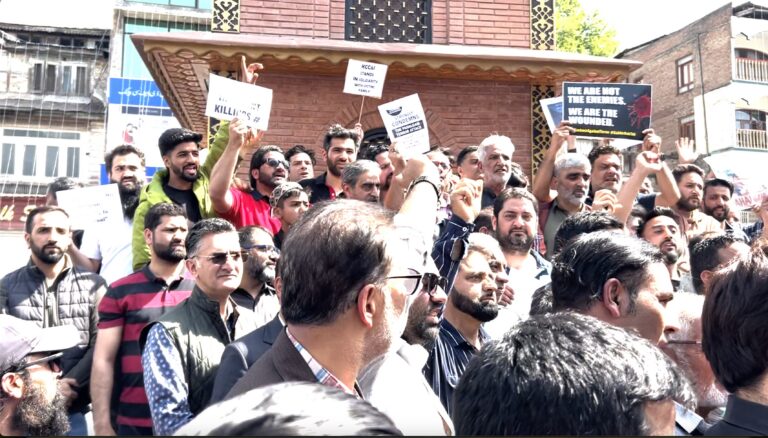
For the past seven months, hundreds of Pandits have been using non-violent action to communicate their demands for security to the Union Territory of Jammu and Kashmir administration. The protestors hold placards asking a direct question to the ‘silent’ administration: “What are you going to tell my family if I will be killed?”
-
Leadership in peacebuilding
In this article, our local correspondent in India takes on the concept of leadership, and why it’s vital for peacebuilding. She assesses examples from around the world, explores four styles of effective leadership for peace, and calls the potential of the emerging generation of youth leadership to be recognised.