Anna Romandash, 2025
The Women Who Fight Ukraine’s Invisible War
In the gaps left by state institutions which have been stretched to breaking point, it is Ukrainian women, such as Leniye Umerova, Kateryna Borozdina, and Nina Pakhomiuk, who have stepped in to vital roles supporting vulnerable people.
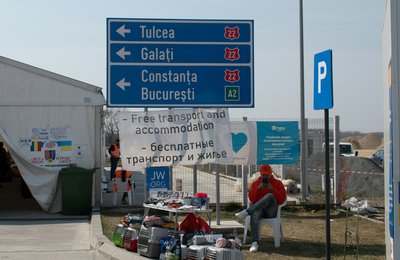
When Russia invaded Ukraine in February 2022, the world watched tanks roll across borders, missiles strike cities and millions of refugees pour into Europe. Less visible, but no less devastating, was another war that unfolded in the shadows: the kidnapping, trafficking and illegal displacement of civilians. Along refugee routes, traffickers continue to prey on women and children fleeing bombardment. And in the gaps left by state institutions which have been stretched to breaking point, it is Ukrainian women, such as Leniye Umerova, Kateryna Borozdina, and Nina Pakhomiuk, who have stepped in to vital roles supporting vulnerable people.
Kidnapped into Silence
Leniye Umerova is a Crimean-born activist in her twenties, and for her the danger does not come from shadowy traffickers but from the Russian state itself. In 2022, she attempted to reach her gravely ill father in Crimea; but the peninsula has been under Russian occupation since 2014.
Since then, Crimean Tatars — the Indigenous people of the region and among the most outspoken critics of the annexation — have faced systematic repression: raids, arrests, and enforced disappearances. There are at least 205 Crimean political prisoners currently in detention, and 134 of them are Crimean Tatars.
With direct routes from mainland Ukraine to Crimea blocked by the war, Umerova was forced to take a week-long detour into Russia, through Georgia, exposing herself to the scrutiny of Russian border guards.
At the checkpoint, officials examined her Ukrainian passport. It listed her birthplace: Crimea. “They ask for a Russian passport [which] I don’t have,” she recalls. Within hours, men in civilian clothes dragged her off a bus. “From that moment, I disappeared.”
She was shuttled through detention centres in North Ossetia, denied a lawyer, and subjected to fabricated charges. At first she was told she had violated migration rules. Months later, Russians accused her of espionage. In Moscow’s Lefortovo prison, she encountered other Ukrainian women kidnapped from occupied regions.
“We all share one thing: invisibility,” Umerova says. “We are civilians, not soldiers. But our lives are treated as disposable.”
She spent more than a year in Lefortovo, enduring sleep deprivation and psychological pressure. In 2024, she was released in a prisoner exchange. Today, she campaigns for civilian hostages still trapped in Russian prisons.
Umerova is a frequent speaker at international events and forums, where she brings up the names of those illegally kidnapped by Russia. Alongside like-minded activists, she organises campaigns and protests to attract domestic and international attention to the victims. She also supports the families of those detained, educating them on legal and advocacy tools to free their loved ones.
“Prisoners of war are visible. Civilians are not,” she says. “But these are Ukrainian citizens. They sit in prison only because they refuse to betray their dignity.”
La Strada–Ukraine
“Displacement makes people vulnerable,” says Kateryna Borozdina, who coordinates Ukraine’s national hotlines at La Strada–Ukraine. The organisation manages tens of thousands of calls each year from women in vulnerable situations, giving them direct legal assistance. For example, it provides advice on how to seek protection in a country where they may be held captive, or which authorities to go to when fleeing from abuse and slavery.
“People are fleeing bombs, leaving everything behind, and traffickers exploit that uncertainty every single day,” Borozdina says. Her team operates two hotlines: one for domestic violence, trafficking, and gender discrimination, and another for children and youth. In 2023 alone, they handled 45,000 calls.
“About three per cent involve trafficking,” she says, “but that number is not small. It represents real people in danger, and the trend is rising.”
Her staff now experiments with unconventional tools: an online course on Prometheus, a Ukrainian digital education platform, and an interactive quest game that allows young women to navigate simulated trafficking risks. These tools educate the most vulnerable groups about trafficking, how it works, and how to protect themselves from it, with the hope that people will be less likely to fall victim to traffickers, even in crisis situations.
“Traffickers know how to manipulate urgency. They tell you, ‘Don’t lose this chance, only you have it’,” Borozdina says. “We need to teach people to recognise those tricks before it’s too late.”
Healing the Stigma
However, even for those who return home, freedom does not mean peace. Survivors of captivity or trafficking face stigma, unemployment, and lasting psychological scars.
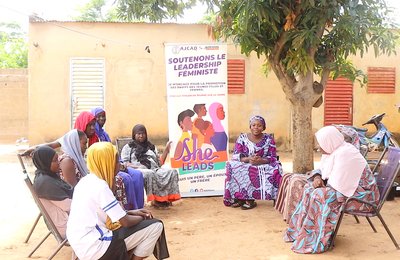
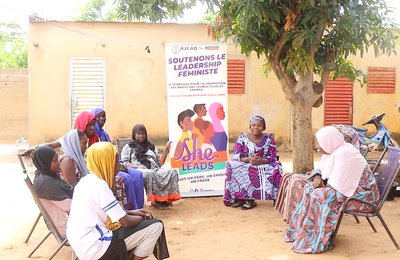
“Many survivors come back not just with trauma but also with suspicion from their communities,” explains Nina Pakhomiuk, head of Volyn Perspectives, a human rights and feminist collective in western Ukraine that supports women returning from Russian prisons or trafficking networks.
“Neighbors whisper that if a woman was in Russian captivity or was trafficked, she must have collaborated or been broken,” she says. “Our work is to help them rebuild dignity — to find jobs, reconnect with their children, to remind them they have a future.”
Her organisation offers safe spaces, therapy, and vocational training. It runs peer-support circles where women mentor each other through bureaucracy and trauma. “Survivors cannot heal alone,” Pakhomiuk says. “What we do is build communities of trust, so women do not disappear twice — first in captivity, then in silence.”
The peer-support circles run by her organisation now operate in several towns across Volyn, thanks to which the participants manage to return to work and reconnect with family members.
Both Volyn Perspectives and La Strada–Ukraine reduce survivors’ vulnerability while also normalising public discussion of abduction and trafficking, making it easier for women to seek help without fear of stigma.
Building Systems from the Ground Up
Across Ukraine and its borders, displaced women fall prey to exploitation. Some women fleeing the war are lured with promises of housing or work, only to end up as forced labour or in coerced marriages. Others remain in Ukraine but accept abusive arrangements simply to survive. “In some cases, women tell us they would rather stay in exploitation than go back to a destroyed home,” Borozdina says. “That is not a choice. That is desperation.”
Her hotline receives calls from women with differing experiences: for example, tricked into working on farms under abusive conditions in western Ukraine or offered ‘free housing’ by men demanding sex in return. Many cases begin online. “Traffickers push people off safe platforms into encrypted apps like Telegram or WhatsApp,” Borozdina explains. “They want to break the trail, to make them harder to trace.”
International monitoring groups estimate that trafficking cases in conflict-affected parts of Ukraine have risen by nearly 40 per cent since 2022. At the same time, Russia has deported tens of thousands of civilians from occupied areas, many of whom remain unaccounted for.
Into this vacuum step women like Umerova, Borozdina, and Pakhomiuk. Their initiatives span prevention, rescue, and reintegration: tracing the disappeared, documenting abuses, lobbying for exchanges, training survivors and helping them rebuild lives.
The women leading these efforts reject the idea that trafficking, deportation, and illegal detention are the collateral damage of war. They insist these are central fronts of the conflict.
By building networks of support, exposing crimes, and helping survivors reintegrate, Ukrainian women are not only protecting the vulnerable, but they are also laying the foundations for recovery and peace.
“Survivors are not statistics,” Umerova adds. “They are human beings. And when you protect them, you protect society itself.”

Anna Romandash
is an award-winning journalist from Ukraine and Howard S. Brembeck Fellow at the Fourth Freedom Forum.
Read more from Anna Romandash