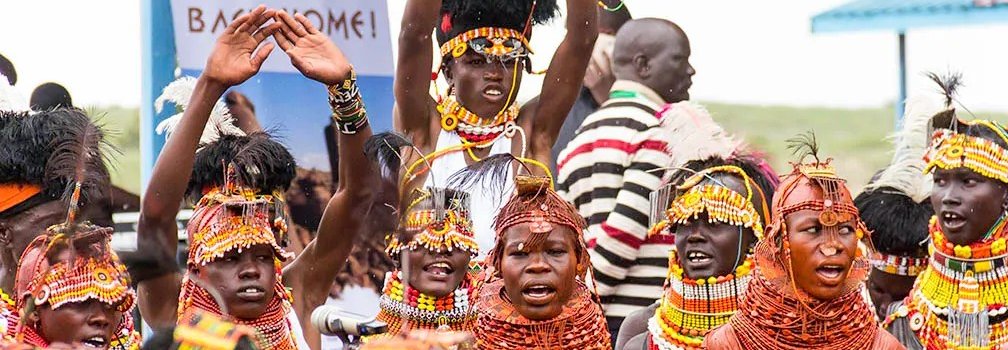
Celebrating Culture as a Path to Peace: Lessons from Kenya’s Tobong’u Lore Festival
For decades, parts of Kenya’s northwest region had been accustomed to inter-community conflicts. But with the arrival of the Tobong’u Lore Cultural Festival, communities began to negotiate a truce and celebrate their rich, shared cultural heritage.
Turkana, Kenya
In 2005, Nayom Lokeris was 23 years old and had been married for only two years when her husband was killed by armed cattle rustlers from the neighbouring Pokot community. They had raided the Kainuk village in Turkana County and made away with 100 heads of cattle. In the process, five people, among them Nayom’s husband, were killed.
“When an alarm was raised, young men were mobilised to pursue the cattle rustlers. My husband grabbed his bow and arrows and hurriedly left to join his fellow men,” Nayom shared.
Like many other young women in northwestern Kenya, Nayom has been forced into early widowhood as a result of intercommunal conflicts that have plagued the region.
For decades, parts of Kenya’s northwest region had been accustomed to inter-community conflicts, cattle raids and a scramble for resources, which left a trail of deaths, family breakups and property destruction, affecting pastoralist communities from Ethiopia, Kenya, South Sudan and Uganda.
The four countries not only share borders but also many communities with common and shared heritage, culture and traditions. But despite this connected cultural identity, the Turkana, Pokot, Rendille, Samburu, Gabra, Borana, Toposa, Dassanech and Karamoja communities have endured a love-hate relationship for years.
According to Abraham Lokuwom, chairperson of the Turkana community council of elders, “Our villages are filled with graves of women, children and men who should be alive today. They died because of our own selfishness and love for material possessions,” Lokuwom said.
United by blood, divided by greed
According to Lokuwom, past efforts to find a solution to the inter-communal violence yielded little, with elders, security and religious leaders struggling to convince young warriors to lay down their weapons.
“The young people often believed in the art of retaliation. Our communities strongly held on to the retrogressive culture where cattle raids were tied to identity, survival and pride,” said Lokuwom. “We held countless inter-communal and cross-border meetings, walked long distances to negotiate peace, and even agreed on ceasefires, but they rarely lasted.”
Former Turkana County Governor Josephat Nanok says that mistrust among communities, despite sharing a heritage, ran so deep that even small disagreements could quickly spiral into deadly clashes.
“We had no development because of the recurrent conflicts. Our schools, hospitals and markets were shells as a result of endless attacks and killings, which were a common occurrence across the region,’’ said Nanok, who currently serves as Kenya’s State House Comptroller.
When political, religious and government interventions failed to yield results, Nanok explains that leaders from the affected communities opted to try a cultural approach.
“We have witnessed so many peace interventions, including forceful disarmament, but the situation only got worse. It wasn’t until the communities took the lead in the peace and reconciliation process that positive signs began to emerge,” he said.
Finding a solution through culture
While serving as Turkana County Governor in 2014, Nanok turned a cultural event into a peace initiative—bringing peace to the conflict-ridden region.
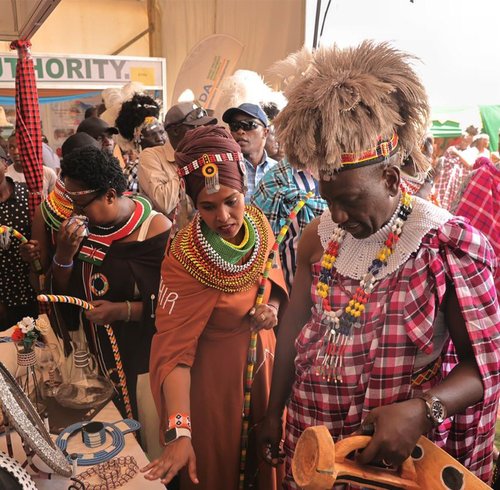
The Tobong’u Lore Cultural Festival is a Turkana community cultural event that celebrates its rich heritage. The name ‘Tobong’u Lore’ means ‘Welcome Back Home’ in the Turkana language. Nanok says he decided to use the cultural event as a symbol for cultural reconnection and unity among the pastoralist communities in Kenya and the neighbouring countries.
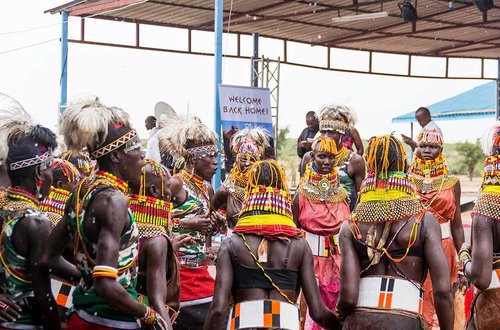
The annual gathering fosters peace by bringing together pastoralist communities to celebrate their shared identities, cultural values and traditions. During the festival, communities display their cultures through music, dance, food, traditional attire, storytelling, sports and traditional crafts. Elders from different communities use the festival to negotiate truces and peace between the warring sides.
Col. (Rtd) Richard Leiyagu, patron of the Samburu community council of elders, stated that the festival was intended to remind the warring communities that they shared names, language, culture and tradition, and that fighting each other was like fighting oneself.
“As community elders, we felt that if we spoke to them in a language they under[stood] and reminded them of the many good things they share, then we might achieve the peace we desired,” said Leiyagu.
Leiyagu noted that the annual cultural peace initiative initially involved only Kenyan communities, but later expanded beyond its borders to attract participants from neighbouring Ethiopia, South Sudan and Uganda.
“Using culture as a uniting tool has worked wonders. The festival continues to serve as a platform for peacebuilding among communities, where leaders and elders engage in dialogue on regional cooperation, resource sharing and conflict resolution,” Leiyagu explained.
Bearing the fruits of peace
Since 2014, the festival has been a bedrock for dialogue, reconciliation and shared identity, where elders, youth, and women use the space to negotiate truces, discuss grazing corridors, and celebrate cultural ties that transcend borders.
For people like Nayom, the festival not only brought peace and reconciliation but also healing. She says the festival has “helped them realise that they have more that unites them than what divides them.”
She continued, “Through the festival, we have learned that we are one people and we can all share the little available resources without hurting or killing one another.”
Leiyagu explained that the festival has also acted as a revelation to rival communities, that “killing a member of a rival community is like killing your own brother.”
Ekai Lomorukai, a reformed cattle rustler from the Turkana community, believes, “For long, we valued livestock more than human life, and that led to the unwarranted killings of many innocent souls. This festival has provided an excellent platform of self-reflection and reform for many of us.”
Lomorukai now leads a group of 150 reformed cattle rustlers from the Turkana community as cross-border and intercommunity peace ambassadors.
“Our work as reformed cattle rustlers is to move across communities, preaching peace and convincing young people to abandon vices that compromise peace, security and peaceful co-existence.”
One key result of the inter-community cultural exchange has been the exchange of stolen cattle among communities, the surrender of illegal firearms used in cattle rustling, and the release of abducted community members.
According to Leiyagu, since 2014, there has been a significant drop in cases of inter-community cattle rustling, killings and abductions.
“Yes, we still have cases of inter-community conflicts here and there, but not as they were in the past years. Communities are boldly denouncing cattle theft and even cooperating with security agencies to track down those destabilising peace,” Leiyagu said.
During the 2025 festival, Kenya’s President William Ruto said that the festival is unique because it not only brings peace but also “strengthens the bonds between various communities and builds a sense of oneness that weakens the impulses of conflict and division.”
Upsetting retrogressive culture
Through the event, community elders, women, and youth candidly engage in conversations around harmful practices such as female genital mutilation and forced early marriages that have worked against girls and women in the pastoralist communities.
Josephine Kulea, a human rights defender in Samburu, said, “The Tobong’u Lore festival has been part of the evolution of our traditions. We have challenged harmful cultural practices, and our girls can go to school, grow, and choose their future without fear of culture,” says Kulea.
For Lokuwom, the Tobong’u Lore is not just a festival but the future of pastoralist communities in Kenya’s North Rift region.
Locations
Themes