AJCAD, 2025-2026
Building Peace Within Communities: AJCAD
Thousands of young people are joining with AJCAD with the shared belief that peace cannot be built solely in the political or diplomatic spheres, but rather, at the heart of communities, where conflicts are experienced on a daily basis.
YOUTH, PEACE AND SECURITY IN ACTION IN THE SAHEL
Ten years after the adoption of the Youth, Peace and Security (YPS) agenda by the United Nations, young leaders in Mali remain committed to addressing the common challenges they continue to face. Guided by the same principles as this agenda, thousands of them are now joining forces within the Association des Jeunes pour la Citoyenneté Active et la Démocratie (AJCAD Mali). They are united around the same goal and, above all, convinced of one thing: peace cannot be built solely in the political or diplomatic spheres, but at the heart of communities, where conflicts are experienced on a daily basis.
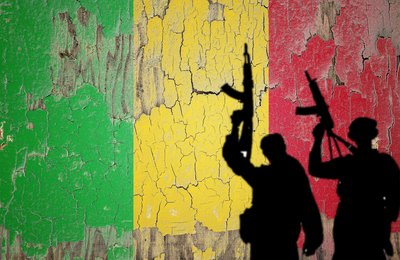
The context in which AJCAD Mali was launched in 2014 justifies its members' fervour to achieve tangible results on the ground. Since 2012, the country has been going through one of the darkest periods in its contemporary history. Successive coups d'état, persistent insecurity, the expansion of armed groups, inter-community conflicts and massive population displacements have profoundly weakened the country's social fabric. Armed violence, combined with poverty, exclusion and mistrust of institutions, has left lasting scars on communities, particularly among young people and women.
In this context of prolonged crisis, young people could have been swept away by despair, anger or inaction. Yet, against all odds, they have become one of the strongest pillars of collective resilience. Often perceived as vulnerable or at risk, many young Malians have chosen a different path: that of civic engagement, dialogue and peacebuilding at the local level.
FROM CRISIS TO CIVIC ACTION: THE BIRTH OF A COMMITMENT TO PEACE
It was in this climate of profound upheaval that the AJCAD Mali was founded more than ten years ago. Founded by young leaders convinced that democracy, active citizenship and political participation are essential levers for lasting peace, the organisation has gradually established itself as a major player in conflict prevention and social cohesion.
In its early days, AJCAD Mali was a modest initiative, driven by a handful of young people determined to reject fatalism. "There were only 20 of us. Today, there are more than 20,000," says Adam Dicko. She is the Executive Director of an association that, over the past ten years, has become a structured movement, established in many regions of the country and capable of reaching thousands of young people, women and community leaders.
This decade has not been straightforward. It has been marked by repeated crises, political shocks, persistent insecurity and increasing restrictions on civic space. However, far from discouraging engagement, these challenges have strengthened the conviction of the young people of AJCAD Mali: peace cannot be imported or imposed, it must be built from within, by those who need it most.
"If we don't take our place, no one will do it for us," Adam Dicko insists.
CITIZEN ACTION CLUBS: PREVENTING CONFLICTS AT THE LOCAL LEVEL
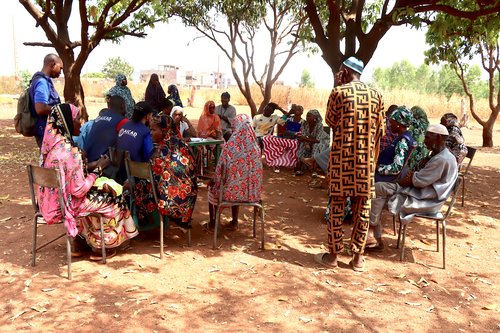
At the heart of AJCAD Mali's strategy are the Citizen Action Clubs (CLAC). Present in many municipalities, particularly in rural areas, these clubs bring together young people trained in active citizenship, community dialogue and democratic accountability.
CLAC members share a common understanding: peace cannot be decreed, it must be built daily through concrete practices of transparency, listening and inclusive participation.
The example of the rural municipality of Kaladougou, located in the Dioïla region, perfectly illustrates this impact. For several years, the mistrust of the municipality's inhabitants towards local elected officials had led to a collapse in tax collection. The population was reluctant to contribute because they said they did not know where their money was going. By organising accountability days during which mayors publicly report on the management of local affairs to promote broader support for local taxation, young people have rebuilt trust. The collection rate has risen from 23% to 56%, reflecting a dynamic of local peace based on trust.
HEALING INVISIBLE WOUNDS: WOMEN, GENDER-BASED VIOLENCE, AND RESILIENCE
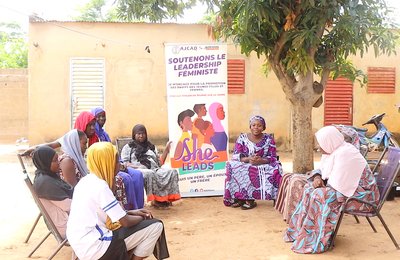
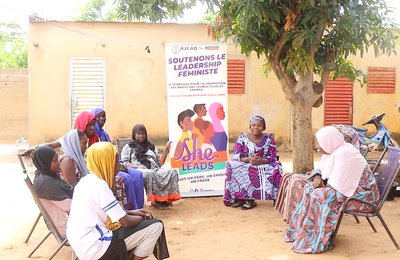
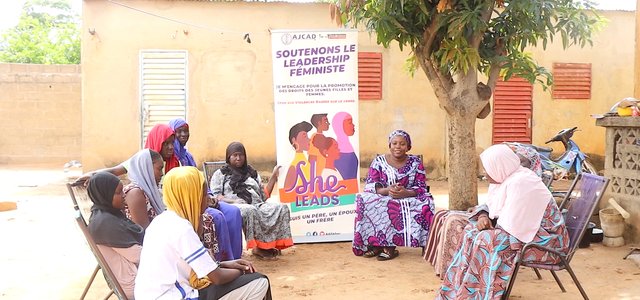
Lasting peace requires a reduction in structural violence, particularly that which affects women. Through the She Leads project, AJCAD Mali has set up 44 safe spaces in the cities of Bamako and Ségou. These spaces have become incubators of resilience and community mediation, guaranteeing their members an environment of free expression and physical safety. They host educational activities on issues related to the promotion of women's leadership for peace and social cohesion.
She Leads' superpower lies in training and raising awareness amongst girls and women on issues such as female leadership, gender-based violence (GBV), and harassment. The magic happens when those who have benefited from positive change become agents of change in their communities. They learn to take charge of their lives and overcome social barriers to develop sustainable peace initiatives around them.
EDUCATION, MEMORY AND CITIZENSHIP
Ignorance is a breeding ground for violence. AJCAD Mali has acknowledged this reality in its peacebuilding strategy. That is why it is working to cultivate knowledge as a tool for sustainable peace. Its Youth Citizenship Centre (CIJES), dedicated to strengthening the skills of young people, is helping to bring this idea to fruition. The Centre develops and implements capacity-strengthening programmes on peace and development. The mechanism is deployed as close as possible to communities through Community Citizen Centres (3Cs), which are responsible for running local training sessions.
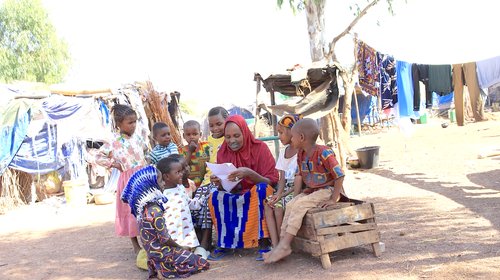
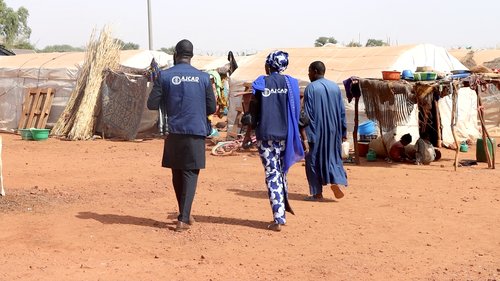
Peace and development requires civic engagement based on democratic values. AJCAD Mali's field teams are working across the country to translate this conviction into concrete results. In 2018, for example, more than 300,000 citizens were assisted in obtaining their NINA [1] cards, transforming access to voting into an act of peace. This achievement is the result of a vast citizen assistance campaign organised in the regions of Kayes, Sikasso, Ségou Mopti, Kati and the District of Bamako to mobilise young people to actively participate in the elections.
MALI'S YOUTH, ARCHITECTS OF LASTING PEACE
The image below captures a moment during which internally displaced women in Mali take part in educational discussions organised in their camp. Set up as part of the "Benkadi Project" ("Good Understanding" in the Bambara language), these discussions aim to strengthen trust, mutual respect and coexistence within the communities in which these women live.
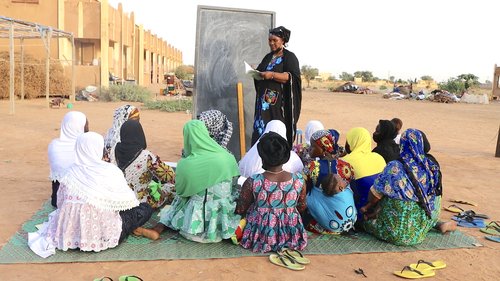
For months, these women have been learning to read and write and acquiring the skills they need to become more independent, enabling them to become more involved in the community. These women have been empowered on the themes of peacebuilding, social cohesion, and conflict prevention and management.
Better informed and more confident, these women now play a key role in conflict prevention and management within their communities. The local village chief calls on them to reconcile people in conflict. This is just one example among many of victims of the security crisis who have become actors of peace.
More than ten years after its creation, AJCAD Mali remains a beacon of hope. Embodying the spirit of the YPS, it demonstrates, according to Adam Dicko, that "lasting peace must be carried by those who live through conflict on a daily basis.”
[1] The NINA card is the only form of identification accepted at polling stations. According to the electoral law No. 06-044 of 2006, citizens who are registered to vote but do not have their NINA card will not be allowed to vote under any circumstances.
Aliou Hasseye
Aliou Hasseye is a Malian journalist who trained at the École Supérieure de Journalisme de Lille (ESJ Lille). He is the News Editor at Lambda Voice, a media outlet created by AJCAD Mali dedicated to general news and raising awareness about democracy, governance, equality and other issues.
Leer más de Aliou Hasseye