The business of peace
What motivated Priya Parker to discard her skill-building curriculum during a dialogue workshop for reconciliation efforts in Gujarat, India?
This post was originally published on the Ashoka Peace Blog
“I am tired of watching them kill my brothers,” Fatima told us matter-of-factly. As we sat cross-legged on the floor in the small hot room, forty eyes turned to me. I felt paralyzed. The thought of leading an exercise in “listening” and “facilitating dialogue” suddenly seemed absurd.
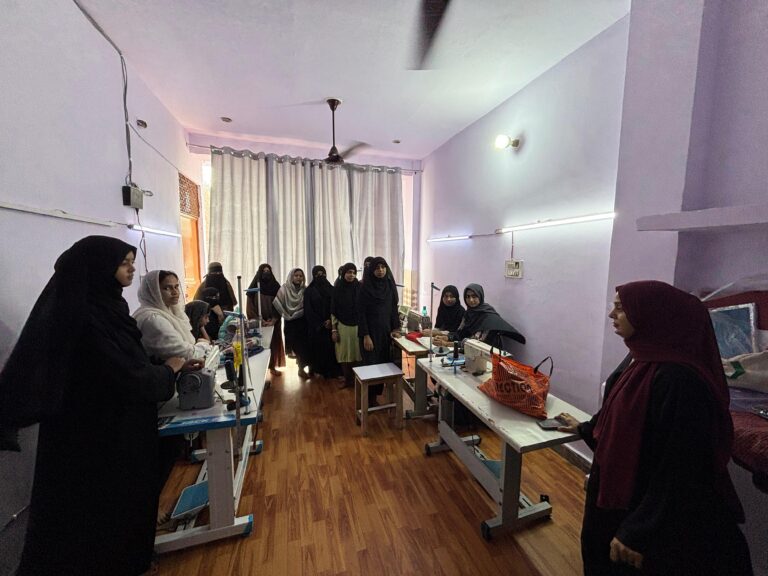
It was a Saturday morning in Sabarkanta, a village in the western Indian state of Gujarat, and by 10 a.m. it had already reached 103 degrees. I had been asked to conduct a workshop for twenty Muslim community workers who had lost their homes and families in the 2002 Hindu-Muslim riots.
Although I had studied ethnic identity and communal violence and had conducted similar workshops in the US, in southern Africa and in New Delhi, I had never before worked at the site of recent violence, nor with its direct victims.
The purpose was to introduce techniques of community reconciliation through dialogue, to supplement their ongoing battle for legal redress. Donors were interested in supporting peace-building groups in the state, and it was my job to lay the ground work. I had become dialogue’s door-to-door saleswoman.
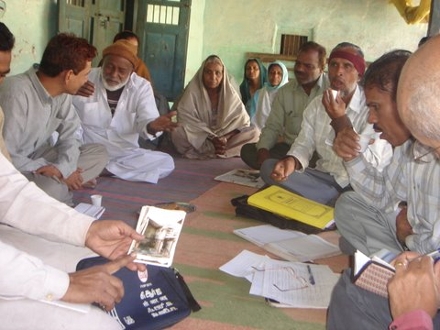
I began the workshop by running my regular “ice-breakers”: “What inspired you to come here today?” I asked encouragingly. I wasn’t ready for their answers:
“We still don’t have homes.”
“The state government returned the rehabilitation funds to the central government untouched.”
“Those who supported the riots have been voted back into power.”
“They have closed our shops.”
I began to see how irrelevant reconciliation can seem to families still homeless four years after a violent eruption. I realized that the small-group dialogue approach, on which I had worked for five years, could have only limited value in such situations. By continuing the eight-hour workshop that I had been hired to lead, I would only be distracting these people and wasting their limited time and resources.
I had gone into the room that morning to “teach” reconciliation and understanding. Coming from a bi-racial, bi-cultural and bi-religious background, my life story was intensely wrapped up in —even dependent on— the belief that dialogue can solve anything. But I realized that morning the utter inapplicability of my conviction to my new friends. I scrapped my skill-building curriculum and shut down my laptop. Instead of training them to run dialogue groups, we spent the afternoon building an action plan: identify lawyers, file police reports, lobby the central government for returned state funds, locate safe schools. I didn’t need to stop them from fighting; I needed to give them access to more productive ways of fighting. That day rattled my core assumptions about what it means to resolve conflict.
In my after-action report to donors, I told them what they probably didn’t want to hear: that funding for dialogue projects would, at present, be a misallocation of resources. It was not a time for talk in Gujarat, but a time for roofs, running water, and employment generation.
Locations
Themes