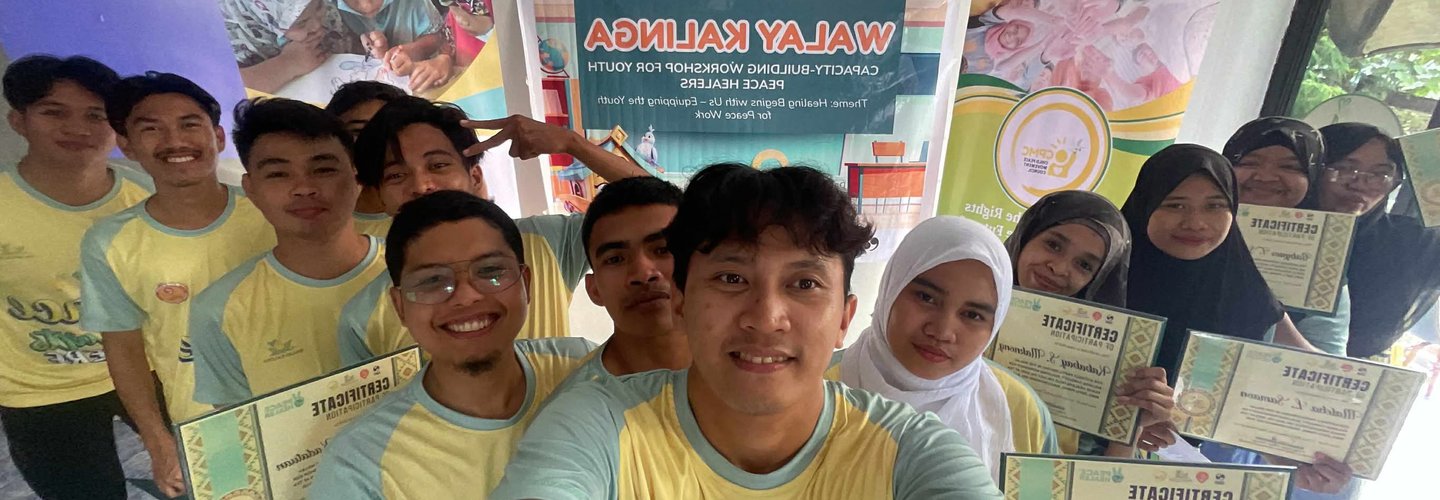
Stories That Heal: Youth Rebuilding Peace in Maguindanao
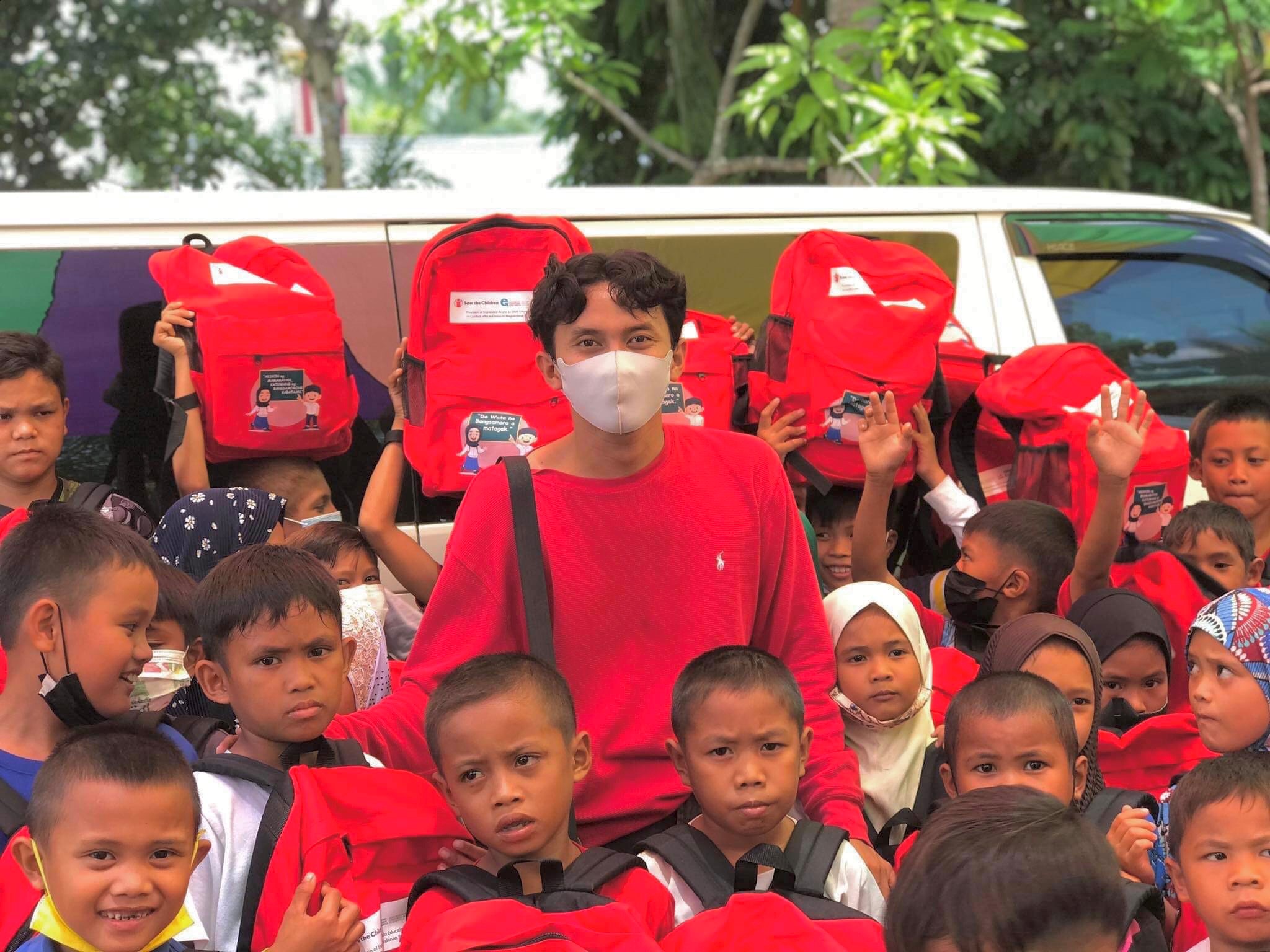
Young people in Maguindanao del Sur have created safe and culturally-grounded healing spaces. Here children and youth can begin to process fear, express emotions, and rebuild trust. So far, nearly 100 young people have benefited from it, transforming silence into shared stories and resilience.
In the quiet stretches of Maguindanao del Sur, Philippines, silence is not always peaceful. In municipalities like Mamasapano, Shariff Saydona Mustapha, and Datu Salibo, silence has often been a form of survival shaped by years of living in the shadow of conflict. For many children, memories of bullets flying over rooftops and the distant sound of mortar shells remain part of their lived reality, not just stories of the past.
Maguindanao del Sur is a province defined by both its rich landscapes and its long history of armed conflict. Including the 2015 Mamasapano clash that left deep divisions among communities, the conflict was mainly between the Philippine National Police–Special Action Force (SAF) and the Moro Islamic Liberation Front, with involvement from the Bangsamoro Islamic Freedom Fighters.
Beyond the physical damage, the conflict also left emotional wounds that continue to shape how people relate, trust, and heal. For children growing up in these conditions, trauma is not a moment. It is an ongoing reality carried quietly over time. It is within this reality that a youth-led initiative called Walay Kalinga (House of Care) emerged. Supported by a Peace Direct microgrant as part of the Peace Starts Here campaign, the project creates safe and culturally-grounded spaces. Here children and youth can begin to process fear, express emotions, and rebuild trust. So far, it has reached nearly 100 young people, transforming silence into shared stories and resilience.
At its core, Walay Kalinga is grounded in a simple but powerful belief. Peace cannot grow where pain is left unspoken.
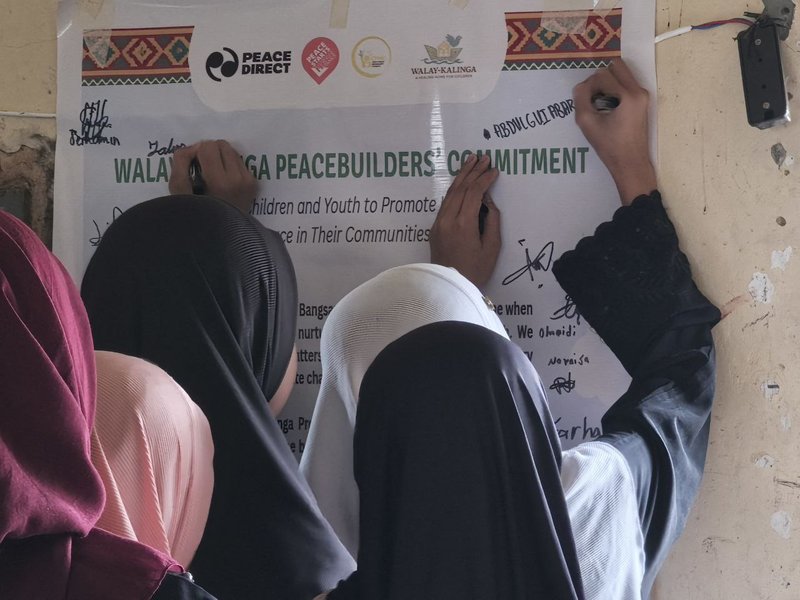
Culturally Grounded Paths to Healing
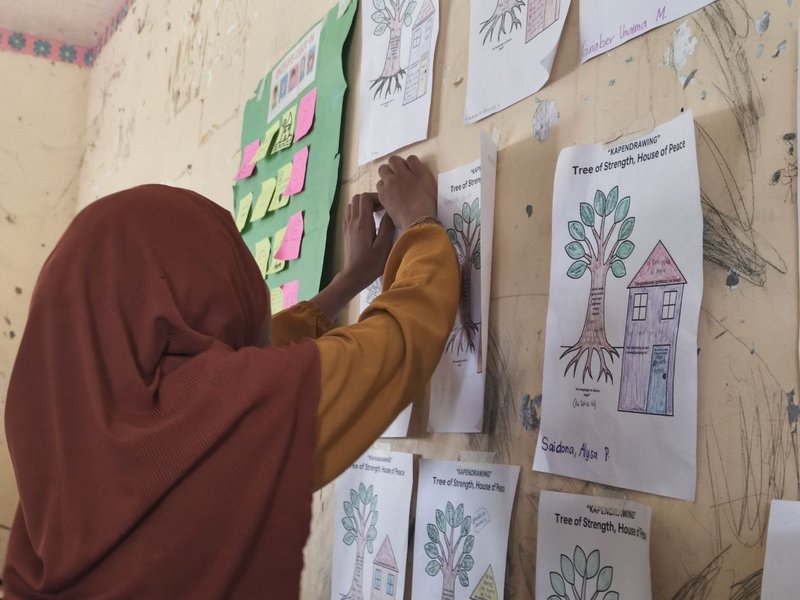
Walay Kalinga approaches healing through methods rooted in local culture and everyday experience, ensuring that support feels familiar. One of these methods is Kapendrawinga, a locally developed art-based psychosocial activity where children express emotions through symbols and dreamcatcher-inspired drawings. In a context where trauma is often normalised and silence becomes the default response, art becomes a safe and accessible language for expression.
Another approach is Kapanudtol, a Maguindanaon term for storytelling. In guided group circles, children share their experiences, fears, and hopes. For many participants, this is the first time they have been given a structured space to speak and be heard.
The impact is often immediate. Participants describe feeling lighter, safer, and more hopeful after sessions, as if something long held inside them has finally been released. Together, these approaches shift healing from an individual burden into a shared community process.
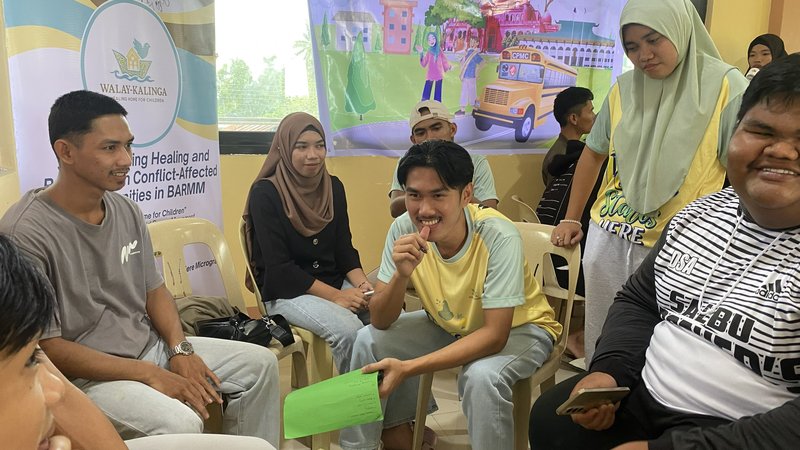
The Rise of the Peace Healers
Beyond the activities themselves, the strength of Walay Kalinga lies in who leads it. The facilitators, known as Peace Healers, are local youth volunteers trained in psychosocial first aid and emergency preparedness. They are community members who share the same cultural background and lived experiences as the participants. This shared identity creates a sense of trust that formal externally-led interventions often struggle to build.
One of these Peace Healers is Mosahad K. Esmail, a 20-year-old student who comes back to his hometown in between academic demands. For him, the commitment is personal.
“The project is truly one of the best things we have done in the community,”
Mosahad shares.
“I realized how much mental health matters, and how important it is for everyone to have a safe space where they can share their battles and their stories of hope and resilience.”
Through his work, Mosahad has witnessed a shift among participants. Children who once remained silent are now beginning to open up – some even share their own stories spontaneously. Hesitation is slowly turning into self-confidence and trust.
Building Peace That Lasts
As the project expanded, it became clear that healing cannot be guaranteed by temporary sessions alone. It must be sustained within the community itself.
To ensure continuity, Walay Kalinga turned over its peace modules, known as “Kwento ng Paghilom,” to local partners. The Sangguniang Kabataan (SK) of Barangay Magaslong, the Philippines’ official youth council composed of elected leaders aged 15 to 24, plays a key role in grassroots governance by organizing programs for youth development and community engagement. In this context, the SK is empowered to lead community-based healing activities, engaging fellow young people in peacebuilding efforts. Another partner is the Ma’had Iman Al-Islamie Inc., an Islamic educational institution that provides both religious and academic instruction. It has integrated the sessions into its classroom programmes, supporting students’ wellbeing while reinforcing values of peace, resilience, and mutual understanding.
These partnerships reflect an important shift. Peacebuilding is no longer just the focus of a single project, but rather it is embedded within the approach and work of local institutions.
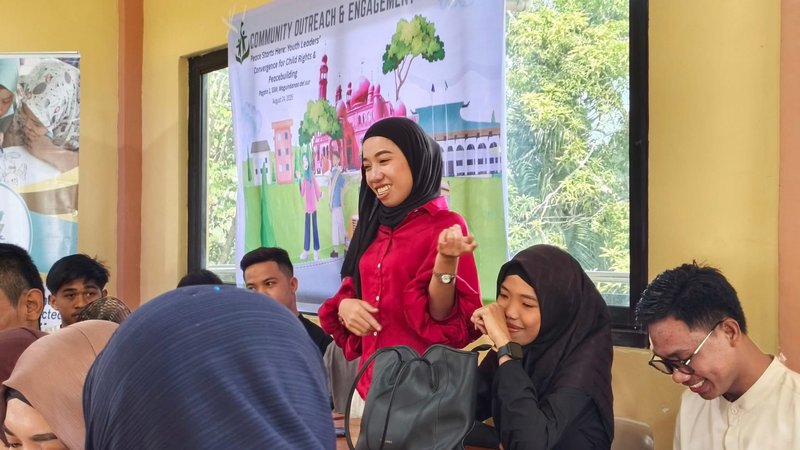
Healing as the Foundation of Peace
Peacebuilding is often framed through agreements and political milestones, but for us in the Bangsamoro, the story of peace is inseparable from a long and painful history of struggle for identity and self-determination. For decades, our communities have endured conflict, displacement and the weight of narratives that often misrepresented who we are. Healing, in this context, is not a simple step forward. It is a continuing process of looking back, of acknowledging that every wound carried by our ancestors has become part of who we are today.
As a Bangsamoro and as a youth leader, I carry this history with both pride and pain. It is not easy to forget what our people have gone through, and perhaps forgetting is not what we are called to do. Instead, I have come to believe that healing means learning how to live with these memories, to transform them into strength, and to allow them to guide how we build peace in our communities today.
Through Walay Kalinga, I see how this process begins in small but meaningful ways. When young people share their stories, when they begin to name their experiences, they are not only healing themselves. They are reclaiming a narrative that has long been shaped by conflict. In these moments, I am reminded that our identity as Bangsamoro is not defined solely by struggle, but also by resilience, dignity, and the capacity to rise beyond it.
I continue to hope and work toward a future where the world understands us more deeply. I seek every opportunity to represent our identity in global spaces, not only to speak about our challenges, but to share our unique narratives, our rich culture, and our enduring traditions. For me, this is part of working for peace, to ensure that our voices are heard and that our stories are told by us.
I look forward to platforms where our voices and our healing stories can reach hearts across the world. Spaces where people do not only see our past, but also our humanity, our strength, and our aspirations. In many ways, this is one of those moments. And through this, I continue to believe that healing, when shared, can become a bridge that connects us all.
Locations
Themes