The land remembers: a path to peaceful coexistence in Uganda
What happens when legal aid funding falls silent but the land still speaks? Acholi youth are turning to memory to protect their land in post war northern Uganda.
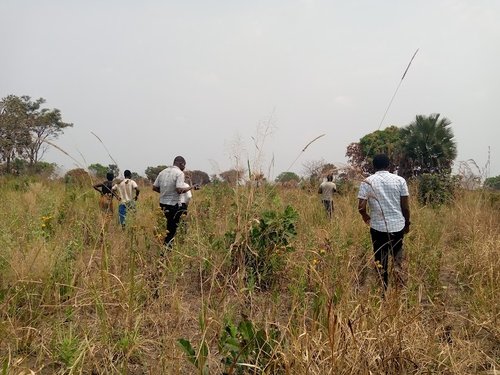
Under the shade of a Shea tree, an elder stops and points to it. “This is where the boundary begins,” he says. Around him, young volunteers write down every word. In Acholiland, where legal aid is shrinking and land disputes are rising, youth are turning to elders’ memories and land itself to protect ancestral boundaries.
The decline in legal aid and stalled land courts have left communities vulnerable to ancestral land disputes. With limited access to formal documentation, families are struggling to prove ownership of land their ancestors have lived on for generations.
Rather than waiting for aid that may never return or formal courts to proceed, Acholi youth are stepping forward to preserve ancestral knowledge and safeguard land boundaries.
Boundaries planted, not written
Before the Lord’s Resistance Army (LRA) insurgency displaced millions across Northern Uganda between the late 1980s and early 2000s, Acholi communities relied on memory, culture, and nature itself to define land ownership.
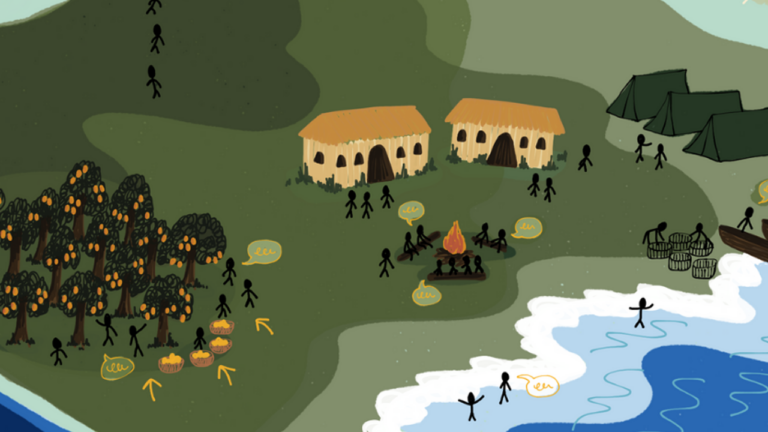
In Acholi culture, land is not just property. It is history, identity, and belonging. Every piece of land has a story. Every boundary has a witness, and for generations, these boundaries were not written on paper deeds or indicated on satellite maps. Instead, they were remembered through lived experience: elders walking the land together, pointing to termite mounds, ancestral burial sites, streams, and boundary trees like the Vitellaria paradox or Afzelia Africana-trees – planted deliberately to symbolise peace between families.
“Our boundaries were planted, not written. We used trees like the Shea butter, and Beyo trees to mark our land. These trees were witnesses and our natural title deeds, standing for generations and reminding our children where their land begins and ends,” said Thomas Nyeko, an elder from Atiak sub-county in Amuru district.
Nyeko explains that land serves as a living record of family and clan history.
When aid withdraws, tensions rise
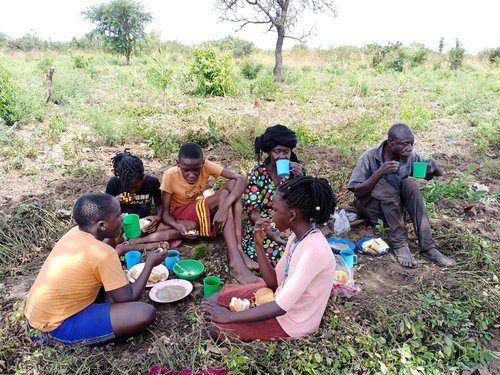
During the two-decade conflict between the Government of Uganda and the LRA, more than two million people were displaced into Internally Displaced Persons (IDP) camps across Northern Uganda.
For years, families lived away from ancestral land. Some boundaries disappeared as trees were cut down, footpaths changed, and farmland remained abandoned.
By the late 2000s, as relative peace returned and families began leaving IDP camps to resettle on ancestral land, Northern Uganda saw an influx of humanitarian and legal support. Organisations such as the Norwegian Refugee Council, Uganda Land Alliance, and International Rescue Committee, provided legal representation, mediation services, and land rights awareness to help communities navigate disputes as over two million Internally Displaced Persons (IDPs) returned home.
However, as the region stabilised and humanitarian priorities shifted, much of the support was scaled down or withdrawn. Legal Aid services reduced their reach, and some organisations closed field offices in rural areas.
This shift left many families without the support they had relied on, as many found portions of their land claimed by neighbours, or taken by investors carrying documents that local communities could neither read nor challenge.
Youth stepping in
Philip Odiambo, a youth researcher involved in a project supported by Trocaire Uganda, explains that when former IDPs returned home, many traditional landmarks had disappeared and some elders who knew the boundaries had died. As a result, many returnees struggled to trace their land, leading to family and communal conflicts.
“Those who returned first began using the land, while those that returned later were also claiming the same land, creating tension,” he says.
According to Odiambo, the situation worsened when some people returned without money and began selling ancestral land. Youth participation is key to the resolution. “Our forefathers taught us that land belongs to the dead, the living keep it in trust, to pass it on to the unborn. That is why the youth cannot just be bystanders,” he says, stressing that youth today must act as custodians and protectors of land for future generations.
To prevent disputes from escalating, Acholi youth are working with elders and community leaders to document land boundaries through oral histories and cultural memory.
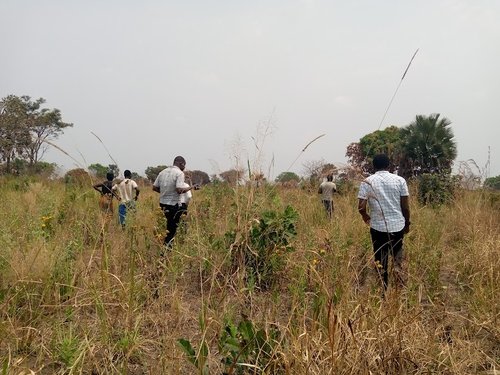
Elders point out where footpaths once turned, where ancestors are buried, where large rocks exist, and where boundary trees were planted decades ago. Youth volunteers then document testimonies, sketch boundary maps, and identify the locations of traditional markers.
Through this process, communities are developing what they call cultural land registries, records grounded not in external authority, but in collective recognition.
In Atiak village, Nyeko’s family had spent years disputing ownership of farmland located near a stream whose path had shifted during years of abandonment. Tensions had escalated to the point where families involved stopped speaking to each other.
During a community documentation exercise, elders from the village walked the land together and identified an old Beyo tree and ancestral burial site that had historically marked the boundary. After several dialogue sessions facilitated by youth volunteers and local leaders, these families agreed on the boundary lines and resumed peacefully cultivating their land.
Women’s intervention
Land disputes also impact women. In Acholi tradition, land is controlled through customary land tenure, where clans and male lineage often determine ownership and inheritance.
According to Pamela Angwech, the Executive Director of Gulu Women Economic Empowerment and Globalisation (GWED-G), land conflicts are creating several implications for women.
“After divorce or widowhood (when a husband dies), the land may revert to the husband’s clan. The implication is that, widows may face land grabbing by in-laws, resulting in women and their children losing their main livelihood,” Angwech noted.
The Uganda Land Act 1998 recognises women’s land rights. As a result, organisations such as GWED G BOING have been working to strengthen women’s access to land through advocacy, awareness creation, and capacity building for both women and local leaders.
The organisation also supports community-based land and mediation committees, which help to handle land disputes at the local level. These committees work alongside cultural leaders and local government structures, including Community Development Officers (CDOs) and production officers, to mediate conflicts and support peaceful resolution processes.
Without initiatives like this, “Women’s voices may be ignored in traditional councils and impacting negatively on post-conflict recovery,” Angwech adds.
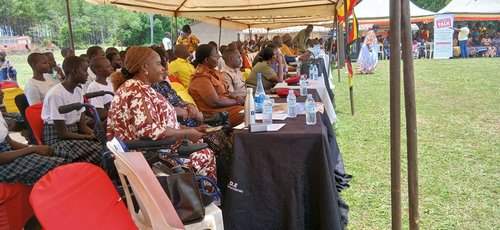
Aber Patience, a Community Liaison Officer with Redeem International-an organisation that offers legal support to widows and orphans in Acholi, recommends that land documentation processes should be participatory with the involvement of community members and elders including women.
“GPS should be used to map features identified by the community,” she suggests, noting that inclusive participation is especially important in customary land systems where decision-making and inheritance practices often favour male lineage. Aber emphasises that involving women is not only about fairness, but also about ensuring that land records reflect the realities of all users and help protect women’s rights in practice.
A process that prevents conflict
Today, land documentation itself is becoming a paramount tool for peace. Families, neighbours, clan leaders, community leaders, and elders gather to discuss boundaries openly. Elders share their recollections while others listen, question, and confirm what they remember. Disagreements are discussed through dialogue, until communities reach an agreement.
Justo Okot, the Prime Minister of the Chiefdom in Atiak Sub-county, Amuru District, says, “When land is documented, it becomes easier to trace ownership and boundaries. Even if elders pass on, the information remains, and can guide future generations.”
According to the Prime Minister, the process has already begun to show positive results in some places.
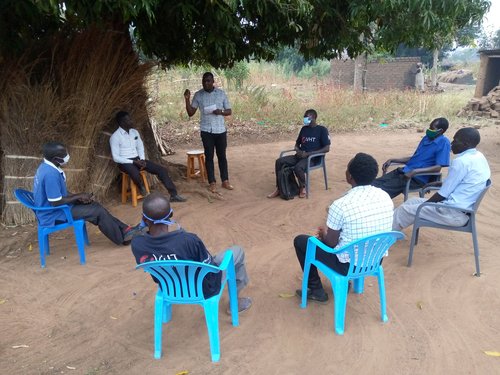
“Where land has been documented and discussed openly, the tension among families has reduced. People understand their boundaries better and conflicts are addressed immediately,” Okot added.
In one notable case, a decades-long land dispute between communities in Kitgum and Agago Districts was resolved through dialogue led by elders and local mediators. The process involved revisiting shared history, agreeing on boundary lines, and planting trees to mark the restored boundaries – a return to traditional practices that symbolise peace.
Not replacing the formal system, but filling the gap
Kennedy Otim, a legal practitioner in Gulu City, believes locally led documentation complements formal land systems.
“These community-based records bridge gaps that formal land documentation often misses. Judges and magistrates sometimes consult local leaders because formal systems cannot fully replace community knowledge.”
According to Otim, external support from government institutions, legal practitioners, and development organisation does not need to only come through monetary value, but also legal advice and technical expertise can help strengthen locally led systems without replacing them.
He points to instances where he has helped families verify customary boundaries without taking over the process entirely. In some scenarios he has guided youth volunteers on how to record testimonies, organise land records, and document agreements reached during mediation meetings.
“This has helped create records that communities can later reference during disputes, reducing misunderstandings and strengthening confidence in locally led resolutions,” he explains.
When memory becomes protection
The experience in Acholiland challenges the assumption in peacebuilding that stability must wait for funding, institutions, or external intervention. Instead, communities are showing that they already possess the knowledge and traditions capable of preventing conflict.
Through documenting oral histories, mapping cultural landmarks and restoring dialogue between families, Acholi youth are helping to transform memory into a tool for peace.
Some disputes are now resolved without courts. Families reclaimed land peacefully and boundaries that once seemed uncertain are becoming clearer through collective recognition. Youth, often seen only as beneficiaries of peacebuilding programmes, are emerging as facilitators, researchers, and record keepers.
In Northern Uganda, land justice may not only be found in satellite maps or courtrooms. It is also being walked, remembered, and negotiated through community dialogue.
Even when aid withdraws, the land has not forgotten, and neither have the people who belong to it. As elders often say, “The land remembers.”
Locations
Themes