Inside the peace model delivering stability in Kaduna State
Founded in 1996 by Margret Mama, the Hope for a Village Child Foundation (HVCF), implemented an innovated peacebuilding model called the Community Peace Committee (CPC). Since 2019, it has helped build peace and security in Kaduna State, Nigeria.
Introduction
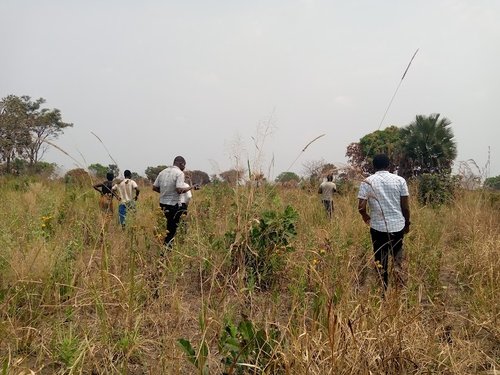
On the evening of 17 April 2026, two youths from the Makyali community of Kaduna state, Nigeria, were killed, as accidental casualties, by cattle herders who had clashed with villagers from Adunga, a community bordering Makyali, earlier that day.
“On the 17 of April, Fulani herdsmen went to Adunga village and had a heated confrontation with the farmers. On leaving Adunga, they had to pass through Makyali to get to their base in the forest, and that is how they attacked and killed two young men in Makyali”, said Kefas Francis, a member of the Makyali peace committee.
There are an estimated 30,000 ‘bandits’ with criminal operations around Kaduna and other states, and their violence along with the clashes between farmers and herders are considered more deadly than Boko Haram attacks. They are fuelled by land and religious differences.
Dr Saheed Owonikoko, a security governance researcher at the Modibbo Adama University Yola, said a complex web of factors contribute to the increasing clashes between farmers and herders and the bandit attacks. Limited land for farmers and herders, ethno-religious differences, and political sentiments reinforce the frequency of these clashes.
“In communities where farmers’ and herders’ clashes breakout, you will notice that farmers are often of one ethnic and religious group while herders are of another ethnic and religious sect,” Owonikoko added.
The economic and social consequences of these constant violent crises mean that farming communities are deprived of livelihoods, while insecurity and religious intolerance are normalised.
“We have experienced a lot of ethno-religious crises in the past. We were having very violent inter-religious crises between Muslims and Christians virtually twice a year, other times, yearly – it all depends on triggers, and any crisis that starts in Sabon Tasha doesn’t end here, it escalates to other parts of Kaduna and even other states,” said Amos Daniel, the Sabon Tasha Peace Committee Secretary.
However, the situation in Sabon Tasha and other communities has changed. “Since 2019, when the Community Peace Committee (CPC) set up by the Hope for a Village Child Foundation came into Sabon Tasha, we’ve not had any kind of crisis till date because the CPC has a model that has built resilience and tolerance between the religions in the community,” Daniel added.
Inside the Community Peace Committee Model
Founded in 1996 by Margret Mama, the Hope for a Village Child Foundation (HVCF) is based in Kaduna state.
“We started the peacebuilding model because we saw insecurity and [an] increase in youth restiveness around our implementing communities, and it became obvious that we need to start engaging with the youth through peacebuilding activities”, said Sadiq Bako, head of the Peacebuilding Section of HVCF.
HVCF set up CPC in four local government areas and eleven villages in Kaduna. They have four distinct components that collaborate to ensure there is a mechanism for maintaining peace in these communities.
The first CPC component is the Early Warning Early Response (EWER) system, and it is made up of 12 members drawn from the Peace Committee. Their duty is to identify early signals of clashes, gather information, collaborate with security agencies, and provide an immediate response to any identified issues.
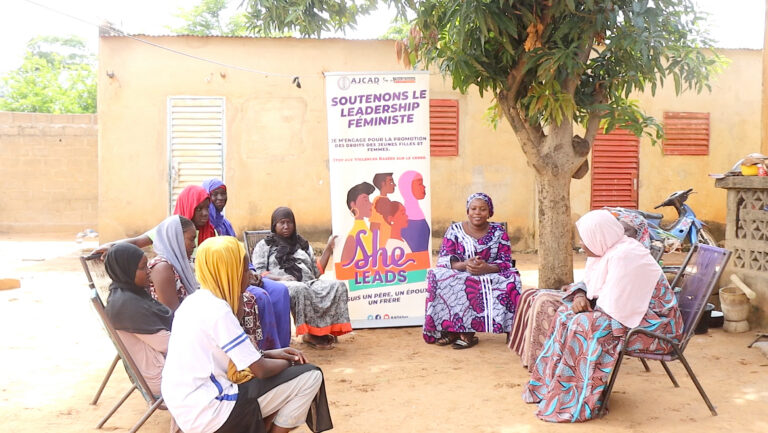
“The EWER group is made up of market women, youths, farmers, hunters and more, who are familiar with the nook and crannies of the community, hence they can easily identify movements of bandits in the forest and immediately collaborate with their local authorities and security outfits to sort it. If there are two conflicting groups in the community, they identify them and arrange for them to have a dialogue”, Bako added.
The dialogue facilitators are the second component and are made up of six CPC members from the youth, women, men and elderly cadres. Their job is to use reflective dialogue to mediate between conflicts, including domestic violence and family disputes. The third component is made up of lay counsellors who provide psychological support to victims of trauma, such as survivors of kidnappings.
The final component is the media department, which runs community-wide social media platforms where it counters rumours and shares announcements from the CPC. All components work together and members are fully trained by HVCF on their roles and escalation pathways.
“Once there are rumours signposted to us by the communications team, we verify and begin sensitising the community. There are hotspots in Sabon Tasha where if there are rumours spreading, people quickly react to them and begin vandalising properties. So, once we verify there are rumours, we move into those spots to ensure it doesn’t escalate”, Daniel noted.
Kajuru community is bordered by several farming villages and Fulani herders’ settlements, which puts it at the forefront of recurrent inter-religious crises, farmer–herder clashes, banditry, kidnappings and reprisal attacks. However, the coming of the CPC in 2019 established a mechanism for settling disputes and minimising conflicts.
“Before the coming of CPC, people were fond of taking laws into their hands, too many reprisal attacks and no community ownership of security. But since 2019, people now utilise the various components of CPC to dialogue, reprisal attacks have been addressed, and in terms of banditry and kidnappings, people are now conscious of security in the community”, said Yusuf Rilwanu, a member of the CPC in Kajuru.
Responding to obstacles
Some CPC members in some communities do demand monetary compensation for their membership, such as costs for fuel or recharge cards. Because HVCF is unable to provide this, members’ morale and commitment may drop. In response, HVCF hold quarterly town hall meetings to enlighten peace ambassadors on the voluntary nature of their roles and its importance. These meetings also include security operatives and other stakeholders to highlight the security system to which CPCs belong.
“Our future target is to expand the project to other communities who do not have a peace committee, because we see the impact the project is having, and also to avoid crises repeatedly spilling over from villages without a peace committee to communities with one,” Bako noted.
Locations
Themes